
Every year, lakhs of candidates clear CTET, yet only a fraction of them secure government or reputable private-school teaching jobs. This leads to an important question that almost every aspirant asks:
“If I clear CTET, will I get a job?”
The truth is simple but crucial:
CTET does not guarantee a job, but it opens doors that are completely closed without it.
However, if you stop at simply “knowing that,” you will still not understand why CTET doesn’t guarantee a job, how recruitment actually works behind the scenes, and what extra steps qualified candidates must take to convert a certificate into a real teaching position.
By the end of this blog, you’ll know exactly how CTET fits into the teacher recruitment pipeline, why many CTET-qualified candidates still struggle, and what you can do differently to move ahead of the crowd.
What CTET Actually Does (and Doesn’t Do)
1. CTET Makes You “Eligible”, It Doesn’t Make You “Selected”
CTET confirms that you meet the minimum national standard for teaching aptitude. But recruitment is a multi-stage process controlled by state governments, KVS/NVS, municipal bodies, and private schools, not CBSE.
This means:
- CTET qualifies you to apply, not to be appointed.
- Selection depends on vacancies, competition, and your overall profile.
You can think of CTET as a passport, as it gives you the right to travel, but not the ticket.
2. CTET Is Now a Baseline Requirement
In many central and government schools:
- CTET is mandatory for teaching Classes 1–8.
- Without CTET, your application is rejected at Step 1 itself.
So, CTET doesn’t give you a job, but without CTET, you have no entry into thousands of vacancies across the country.
3. CTET Is a “Mass Eligibility Test,” Not a Rank-Based Exam
Unlike SSC or UPSC, CTET:
- has no rank system
- has no merit list for hiring
- does not compete beyond clearing 60% marks
This is why passing CTET alone cannot determine who gets a job.
The Truth Behind CTET and Job Security
1. Teacher Recruitment Depends on Vacancies
Government vacancies depend heavily on:
- state-wise budget approvals
- retirement cycles
- new schools or sections being added
- teacher transfers
- court cases delaying recruitment
Some states release huge vacancies; others release none for years. So employment depends more on vacancy cycles than on CTET.
2. States Have Their Own Selection Criteria
Even after CTET, you must clear:
- state-level recruitment exams (e.g., DSSSB, KVS, NVS, State Teacher Recruitment Boards)
- document verification
- interview/demo-rounds
- reservation-based shortlisting
Each state follows different Recruitment Rules (RRs). CTET is just one part of these rules.
3. The Supply–Demand Gap
Every year:
- 20–25 lakh students attempt CTET
- Huge numbers qualify
- But vacancies are limited
So selection naturally becomes competitive.
4. Schools Evaluate More than Just CTET
Schools, especially private or semi-government, look for:
- communication skills
- modern pedagogy understanding
- demo teaching performance
- classroom management
- English proficiency (for many CBSE schools)
- previous internship or experience
This is why CTET-pass candidates with stronger teaching portfolios get hired faster.
What to Do AFTER CTET to Actually Get a Job
Most candidates stop at “I passed CTET.”
The ones who get hired go far beyond that.
Below is a structured roadmap that reflects how actual recruitment happens.
Step 1: Build a Strong Teacher Profile
You must prepare:
- a 1-page teaching CV
- a digital folder with scanned certificates (CTET, B.Ed/DElEd, graduation)
- a short “teaching philosophy” note
- 2–3 lesson plans (EVS, Maths, English, or your subject)
- a demo class script (5 or 10 minutes)
This is what differentiates you from thousands of CTET-qualified applicants.
Step 2: Track Vacancies, Because Hiring Doesn’t Come to You
Monitor recruitment regularly:
Central Level Recruitments
- KVS (Kendriya Vidyalaya Sangathan)
- NVS (Navodaya Vidyalaya Samiti)
- Army Public Schools (via AWES exam)
- EMRS Schools
State-Level Recruitments
Every state issues Primary and Upper Primary teacher notifications.
City-Level/Municipal Recruitment
Many city-level bodies hire teachers for their municipal schools.
Private Sector (Major Opportunity)
Thousands of affordable private schools prefer CTET-qualified candidates.
These schools:
- Hire faster
- Require demo classes
- Use simple interview rounds
Private schools are the fastest pathway to gain classroom experience.
Step 3: Strengthen the Skills That Actually Get You Hired
Schools often select candidates based on classroom presence, not test scores.
Focus on:
- confidence in explaining a topic
- board-writing clarity
- class control strategies
- communication in English or the regional language
- creative teaching methods (TLMs, activities)
- student engagement techniques
If you shine in your demo class, the interview is almost always yours.
Step 4: Use Experience to Move Toward Government Jobs
Many candidates strategically:
- join a private school after CTET
- build 1–2 years of experience
- apply again to government vacancies like KVS, NVS, DSSSB, state recruitments
Teaching experience improves:
- demo-class performance
- interview confidence
- pedagogical clarity
- real-world classroom understanding
This combination has the highest conversion rate for government selection.
Answering the Question Clearly: Does CTET Guarantee a Job?
No, CTET does not guarantee you a job. But yes, CTET is mandatory for most quality teaching jobs in India, and without it, the path becomes significantly harder.
CTET expands your eligibility, enhances your credibility, and builds trust among employers by showing that you meet national teaching standards. It also allows you to apply for a wide range of government and private school vacancies and serves as a strong foundation for long-term growth in the teaching profession.
In simple terms, CTET is your entry pass, not your appointment letter.
Turning CTET Into a Career, Not Just a Certificate
Passing CTET is a significant milestone because it validates that you meet national teaching standards. However, securing a job depends entirely on how effectively you use this qualification.
When you focus on the core areas and apply consistently, your CTET qualification becomes a powerful gateway to real job opportunities.
When these elements come together, CTET becomes a powerful turning point in your journey as a teacher. In the end, CTET opens the first door, but it is your preparation, skills, and persistence that help you walk through it and move toward the job you’re aiming for.
Also See:
- CTET Feb 2026 Exam Result Out Very Soon: Latest Updates
- Official CTET Answer Key 2026 & OMR Sheet: Direct Download Link & Complete Guide
- CTET Feb 2026 Final Answer Key OUT @ctet.nic.in Soon
- CTET Feb 2026 Display of Answer Key and Scanned OMR Sheet
- CTET Answer Key 8 Feb 2026: Paper 1 & Paper 2 Solutions, Question Paper PDF
- CTET Exam Analysis 7 Feb 2026
- CTET Question Paper 7 Feb 2026 – Paper 2 PDF Download
- CTET Answer Key 7 Feb 2026 – Paper 2 (Official Question Paper Based)
- CTET Feb 2026 Live Updates – Paper 1 & Paper 2 (7 & 8 Feb)
- CTET Feb 2026 City Slip Released: 3 Critical Checks & The “Home Centre” Reality
Best Books For CTET


Related posts:
 CTET February 2026 Exam Announced: Official Notice, Exam Dates, Syllabus & Updates
 CTET Eligibility February 2026: Check Minimum Qualifications for Paper 1 & Paper 2
 CTET February 2026 Exam Pattern and Syllabus PDF Download (Paper 1 & Paper 2)
 CTET Previous Year Papers PDF with Solutions (2024-2018) – Free Download
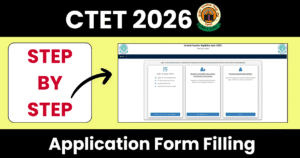 CTET Feb 2026 Application Form – How to Apply Step by Step
 Difference Between CTET Paper 1 vs Paper 2 – Which Should You Apply For?
 CTET vs State TET – Which is Better for Teacher Jobs?
 NCERT Chapters to Study for CTET (100% Relevant)