Every CTET aspirant reaches a moment where preparation slows down because of uncertainty. Is the current score enough? Is aiming just to pass safe? Do category rules change the target? These questions quietly influence how candidates study, revise, and even attempt the exam.
Unfortunately, unclear information around CTET passing marks often leads to overconfidence or unnecessary panic. Knowing the exact qualifying criteria helps plan your preparation with confidence and precision.
This guide explains the CTET passing marks for 2026, clearly outlines category-wise criteria, and helps you understand how these rules impact your real chances of qualification and future teaching opportunities.
Understanding CTET as an Eligibility Test (Not a Ranking Exam)
Before discussing marks, it is crucial to understand the nature of CTET.
CTET is not a competitive or rank-based examination. It is an eligibility test, designed to assess whether a candidate meets the minimum standards required to teach at the elementary and upper primary levels. This means:
- There is no rank list
- There is no competition-based cut-off
- All candidates who meet the minimum qualifying criteria are declared CTET qualified
Your score is judged only against the qualifying benchmark, not against other candidates.
CTET Exam Pattern: Overview
Each CTET paper follows the same structure:
| Exam Component | Details |
| Total Questions | 150 |
| Marks per Question | 1 |
| Negative Marking | None |
| Total Marks | 150 |
| Duration | 2 hours 30 minutes |
Because there is no negative marking, accuracy and full attempts play an important role in maximizing your score.
CTET Passing Marks 2026 (Expected Criteria)
As per guidelines issued by the National Council for Teacher Education (NCTE), which CBSE follows while conducting CTET, the qualifying marks are expected to remain the same in 2026 unless officially revised.
Minimum Passing Marks
To qualify for CTET:
- General Category: 60%
- Reserved Categories (SC/ST/OBC/PwD): 55%
This criterion applies separately to Paper I and Paper II.
Category-Wise CTET Passing Marks (Out of 150)
| Category | Qualifying Percentage | Marks Required (Out of 150) |
| General | 60% | 90 marks |
| OBC (Non-Creamy Layer) | 55% | 82 marks |
| SC | 55% | 82 marks |
| ST | 55% | 82 marks |
| PwD | 55% | 82 marks |
If you score equal to or more than the required marks for your category, you are declared CTET qualified.
Is There Any Section-Wise Passing Criteria in CTET?
No. CTET does not have section-wise qualifying marks.
This means:
- You are not required to pass each subject individually.
- Only the total score out of 150 is considered.
- Weak performance in one section can be compensated for by stronger performance in others.
However, balanced preparation is still important for long-term teaching competence and interviews.
Does CTET Have Cut-Off Marks Like Other Exams?
This is one of the most misunderstood aspects of CTET.
CTET does not have cut-off marks in the traditional sense. There is only a minimum qualifying mark, not a fluctuating cut-off based on competition.
Key difference:
- Cut-off: Changes every year depending on exam difficulty and candidate performance
- CTET Passing Marks: Fixed qualifying benchmark set by NCTE
Once you cross the qualifying threshold, your score does not affect your CTET qualification status.
Does Scoring More Than Passing Marks Give Any Advantage?
In terms of CTET qualification status alone, the answer is “No”. A candidate scoring 90 and another scoring 130 are both equally CTET qualified.
However, higher CTET scores can still matter indirectly:
- Some private schools prefer higher-scoring candidates
- Interview panels may consider CTET scores as a credibility factor
- Higher marks reflect stronger conceptual clarity
That said, CTET score does not guarantee selection, regardless of how high it is.
CTET Passing Certificate: Validity and Importance
Once qualified, you receive a CTET Eligibility Certificate.
Important points:
- The CTET certificate is valid for lifetime (as per current policy).
- There is no restriction on the number of times you can appear for CTET.
- You can improve your score by reappearing, but the best qualification remains valid.
This certificate is required for applying to:
- Central Government schools
- Kendriya Vidyalayas (KVS)
- Navodaya Vidyalayas (NVS)
- Many state and private schools
What Happens If You Miss the Passing Marks?
If you score:
- 89 marks (General) or
- 81 marks (Reserved categories)
You are not CTET qualified, even if you miss the target by just one mark.
In that case:
- You must reappear in the next CTET cycle
- There is no grace marking
- There is no re-evaluation for qualification
This makes targeting at least 5–10 marks above the minimum a smart strategy.
Realistic Score Targets for CTET Aspirants
To stay safe and confident:
- General category aspirants: Target 100–110 marks
- Reserved category aspirants: Target 90–95 marks
This buffer protects you from silly mistakes and ensures smooth qualification.
Common Myths About CTET Passing Marks
Let’s clear some confusion:
- Myth: Higher CTET marks guarantee a government job
Reality: CTET only establishes eligibility - Myth: CTET cut-off changes every year
Reality: Only qualifying marks apply - Myth: You must pass every subject section
Reality: Only total marks matter - Myth: Reserved category candidates need the same marks as General candidates
Reality: Relaxation applies as per NCTE norms
Final Takeaway: What You Should Focus On
CTET passing marks are clear, fixed, and transparent. The real challenge is not understanding the criteria; it is meeting them with confidence. Focus on consistent preparation, strong NCERT-based concepts, and regular mock practice. Aim higher than the minimum to eliminate risk.
CTET is not about competition; it is about competence. Once you cross the qualifying benchmark, the certificate stays with you for life, opening doors to teaching opportunities across India.
Must Read Posts:
- CTET Feb 2026 Exam Result Out Very Soon: Latest Updates

- Official CTET Answer Key 2026 & OMR Sheet: Direct Download Link & Complete Guide

- CTET Feb 2026 Final Answer Key OUT @ctet.nic.in Soon
- CTET Feb 2026 Display of Answer Key and Scanned OMR Sheet
- CTET Answer Key 8 Feb 2026: Paper 1 & Paper 2 Solutions, Question Paper PDF
- CTET Exam Analysis 7 Feb 2026
- CTET Question Paper 7 Feb 2026 – Paper 2 PDF Download
- CTET Answer Key 7 Feb 2026 – Paper 2 (Official Question Paper Based)
- CTET Feb 2026 Live Updates – Paper 1 & Paper 2 (7 & 8 Feb)
- CTET Feb 2026 City Slip Released: 3 Critical Checks & The “Home Centre” Reality







Related posts:
 CTET February 2026 Exam Announced: Official Notice, Exam Dates, Syllabus & Updates
 CTET Eligibility February 2026: Check Minimum Qualifications for Paper 1 & Paper 2
 CTET February 2026 Exam Pattern and Syllabus PDF Download (Paper 1 & Paper 2)
 CTET Previous Year Papers PDF with Solutions (2024-2018) – Free Download
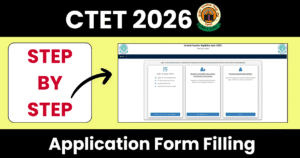 CTET Feb 2026 Application Form – How to Apply Step by Step
 Difference Between CTET Paper 1 vs Paper 2 – Which Should You Apply For?
 CTET vs State TET – Which is Better for Teacher Jobs?
 Does CTET Guarantee a Job? Complete Discussion