Latest CBSE Class 9 Science Syllabus 2026-27 – Get the official syllabus with a chapter-wise breakdown, marking scheme, and expert study tips. Download the official PDF at the end!
The Central Board of Secondary Education (CBSE) has introduced a revised Science syllabus for Class 9 for the academic session 2026-27. The new curriculum focuses on conceptual understanding, competency-based learning, practical application, and interdisciplinary connections rather than rote memorization.
One of the biggest highlights of the new syllabus is the introduction of a new NCERT Science textbook titled "Exploration", which reorganizes topics and includes several modern scientific concepts.
In this article, we provide the complete CBSE Class 9 Science syllabus 2026-27, chapter-wise topics, marks distribution, exam pattern, and important changes.
Overview of CBSE Class 9 Science Syllabus 2026-27
The Class 9 CBSE syllabus for Science is crucial for board exams and sets the foundation for higher classes. The 2026-27 syllabus includes competency-based questions, increased focus on application-based learning, and internal assessments.
| Board | CBSE |
| Class | 9 |
| Session | 2026-27 |
| Subject | Science |
| Book Name | Exploration |
| Content-Type | Syllabus/Curriculum |
| Official Website | https://cbseacademic.nic.in |
New NCERT Class 9 Science Book: Exploration
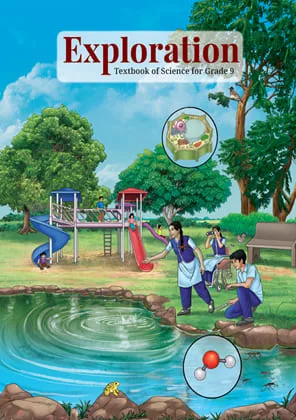
The 2026-27 syllabus is based on the new NCERT textbook "Exploration". The book contains the following chapters:
- Exploration: Entering the World of Secondary Science
- Cell: The Building Block of Life
- Tissues in Action
- Describing Motion Around Us
- Exploring Mixtures and their Separation
- How Forces Affect Motion
- Work, Energy, and Simple Machines
- Journey Inside the Atom
- Atomic Foundations of Matter
- Sound Waves: Characteristics and Applications
- Reproduction: How Life Continues
- Patterns in Life: Diversity and Classification
- Earth as a System: Energy, Matter, and Life
CBSE Class 9 Science Course Structure 2026-27
Theory Examination
- Time Duration: 3 Hours
- Maximum Marks: 80
| Unit | Chapters | Marks |
|---|---|---|
| Unit I: World of Living | Chapters 2, 3, 11, 12 | 27 |
| Unit II: Matter – Its Nature and Behaviour | Chapters 5, 8, 9 | 25 |
| Unit III: Motion, Force, Work and Sound | Chapters 4, 6, 7, 10 | 23 |
| Unit IV: Earth as a System | Chapter 13 | 5 |
| Total | 80 |
Internal Assessment
| Component | Marks |
| Periodic Assessment | 5 |
| Multiple Assessment | 5 |
| Subject Enrichment (Practical Work) | 5 |
| Portfolio | 5 |
| Total | 20 |
Grand Total: 100 Marks
CBSE Class 9 Science Chapter-wise Syllabus (2026-27)
Exam Duration: 3 Hours
Total Marks: 80 (Theory) + 20 (Internal Assessment) = 100 Marks
Chapter 1: Exploration – Entering the World of Secondary Science
This introductory chapter familiarizes students with scientific inquiry, observation, experimentation, and the nature of science. It acts as a foundation for the rest of the course.
Unit I: World of Living
Chapter 2: Cell – The Building Block of Life
Students will study:
- Discovery of the cell
- Plant and animal cells
- Prokaryotic and eukaryotic cells
- Cell organelles and their functions
- Nucleus
- Mitochondria
- Chloroplast
- Endoplasmic reticulum
- Vacuoles
- Plasma membrane
- Cell wall
- Permeability of cell membranes
- Cell division and cancer
- Recent advancements in cell biology
Chapter 3: Tissues in Action
Topics covered include:
- Levels of organization in living organisms
- Plant tissues
- Meristematic tissues
- Permanent tissues
- Animal tissues
- Epithelial tissue
- Connective tissue
- Muscular tissue
- Nervous tissue
- Elementary idea of the musculoskeletal system
- Care of the musculoskeletal system
- Posture, nutrition, exercise, and injury prevention
Chapter 11: Reproduction – How Life Continues
Important topics are:
- Sexual and asexual reproduction
- Types of asexual reproduction
- Reproduction in flowering plants
- Pollination and fertilization
- Seed dispersal
- Human reproductive system
- Formation of gametes
- Fertilization and embryo development
- Menstrual cycle
- Reproductive health and hygiene
- Introduction to birth control methods
Chapter 12: Patterns in Life – Diversity and Classification
Students will learn:
- Importance of biological classification
- Five kingdom classification
- Major divisions of plants
- Major divisions of animals
- Binomial nomenclature
- Viruses as acellular entities
Unit II: Matter – Its Nature and Behaviour
Chapter 5: Exploring Mixtures and their Separation
Topics include:
- Homogeneous and heterogeneous mixtures
- Solutions
- Suspensions
- Colloids
- Methods of expressing concentration
- Mass by mass percentage
- Mass by volume percentage
- Volume by volume percentage
- Separation techniques
- Crystallization
- Distillation
- Paper chromatography
- Sublimation
- Centrifugation
- Coagulation
Chapter 8: Journey Inside the Atom
Students will study:
- Atoms as basic units of matter
- Subatomic particles
- Thomson's atomic model
- Rutherford's atomic model
- Bohr's atomic model
- Electronic configuration (up to 18 elements)
- Atomic symbols
- Valency
- Atomic number
- Mass number
- Isotopes
- Isobars
Chapter 9: Atomic Foundations of Matter
Topics covered are:
- Law of conservation of mass
- Law of constant proportion
- Dalton's atomic theory
- Molecules of elements
- Covalent compounds
- Ionic compounds
- Chemical formulae
- Molecular mass
- Formula unit mass
Unit III: Motion, Force, Work and Sound
Chapter 4: Describing Motion Around Us
Students will learn:
- Motion
- Displacement
- Velocity
- Acceleration
- Graphical representation of motion
- Uniform velocity
- Uniform acceleration
- Kinematic equations
- Uniform circular motion
Chapter 6: How Forces Affect Motion
Topics include:
- Force
- Balanced and unbalanced forces
- Friction
- Newton's First Law
- Newton's Second Law
- Newton's Third Law
Chapter 7: Work, Energy and Simple Machines
Important concepts:
- Work done by a constant force
- Work-Energy theorem
- Mechanical energy
- Kinetic energy
- Potential energy
- Conservation of energy
- Power
- Simple machines
- Pulley
- Inclined plane
- Lever
- Mechanical advantage
Chapter 10: Sound Waves – Characteristics and Applications
Students will study:
- Production of sound
- Propagation of sound
- Longitudinal waves
- Graphical representation of sound waves
- Wavelength
- Frequency
- Time period
- Amplitude
- Intensity
- Speed of sound
- Pitch and loudness
- Sound in solids and liquids
- Reflection of sound
- Echo
- Reverberation
- Echolocation
Unit IV: Earth as a System
Chapter 13: Earth as a System – Energy, Matter and Life
This is a newly emphasized interdisciplinary chapter covering:
- Earth as an interconnected system
- Solar radiation
- Electromagnetic spectrum
- Speed of light
- Interaction of solar energy with Earth
- Differential heating of Earth
- Formation of winds
- Water cycle
- Carbon cycle
- Nitrogen cycle
- Oxygen cycle
- Human impact on Earth's systems
CBSE Class 9 Science Exam Pattern 2026-27
The question paper will increasingly focus on competency-based learning.
Weightage of Competencies
| Competency | Weightage |
| Knowledge and Understanding | 50% |
| Application of Concepts | 30% |
| Analysis, Evaluation and Creation | 20% |
Types of Questions
The paper may include:
- Objective questions
- Very Short Answer (VSA) questions
- Assertion-Reason questions
- Short Answer questions
- Long Answer questions
- Case-based questions
- Source-based questions
- Passage-based questions
- Integrated assessment questions
CBSE will also provide approximately 33% internal choice in the question paper.
CBSE Class 9 Science Advanced (Optional) Syllabus 2026-27
Apart from the regular Science curriculum, CBSE has also introduced Science Advanced (Optional) for students who wish to study additional concepts beyond the standard syllabus.
This optional course is designed for learners who have a strong interest in science and want to develop higher-order thinking and problem-solving skills.
Science Advanced (Optional) Chapters
Students opting for Science Advanced will study the following additional chapters:
| S. No. | Chapter |
|---|---|
| 1 | Measurement – Foundation of Science |
| 2 | Understanding Motion through Experience |
| 3 | Newton's Laws of Motion |
| 4 | The Geometry of Power – Advanced Simple Machines |
| 5 | Work and Energy |
| 6 | Structure of Atom |
| 7 | Chemical Bonding |
| 8 | Mixtures and their Separation |
| 9 | Microscope and Microscopy |
| 10 | Engineering Life: Miracles in Biotechnology |
Science Advanced (Optional) Exam Pattern
| Particulars | Details |
| Nature of Paper | Optional Additional Subject |
| Examination Marks | 25 Marks |
| Duration | 1 Hour |
| Question Type | All HOTS (Higher Order Thinking Skills) Questions |
| Board Examination | Applicable from Class X Board Examination 2027-28 onwards |
Download CBSE Class 9 Science (Advanced) Book PDF
Preparation Tips for CBSE Class 9 Science 2026-27
To score well in the CBSE Class 9 Science exam, students should follow a smart and consistent study plan.
1. Divide Your Study Time Wisely
Focus more on the units carrying higher weightage:
- Unit I: World of Living – 27 marks
- Unit II: Matter – Its Nature and Behaviour – 25 marks
These two units together account for more than half of the theory paper, so mastering them can significantly improve your score.
2. Revise Daily
Set aside 1–2 hours every day for Science preparation.
- Spend time reading and understanding NCERT theory.
- Practice formulas, diagrams, and important definitions.
- Revise numerical problems regularly.
Daily revision helps retain concepts and reduces exam stress.
3. Study from NCERT
The NCERT Class 9 Science textbook is the most important resource for CBSE exams.
- Read every chapter carefully.
- Solve all in-text and end-of-chapter questions.
- Pay attention to examples, activities, and highlighted concepts.
Most board-level questions are based directly on NCERT.
4. Complete Practical Work
Practical activities are important for internal assessment.
- Perform all the prescribed practicals.
- Record observations carefully.
- Practice experiments such as preparing solutions and observing onion peel cells under a microscope.
Good practical records can help you secure full internal marks.
5. Practice Diagrams
Many descriptive questions require neat and labeled diagrams.
Regularly practice diagrams such as:
- Plant and animal cells
- Different types of tissues
- Atomic models
- Sound waves
- Human reproductive system
Well-drawn diagrams can fetch extra marks.
Download CBSE Class 9 Science Syllabus 2026-27 PDF
Click the button below to download the official CBSE syllabus PDF for 2026-27.
📂 Download CBSE Class 9 Science Syllabus PDF
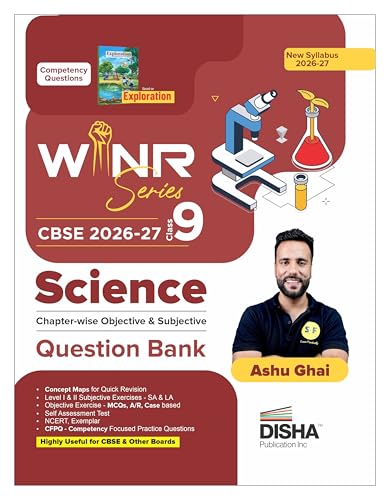
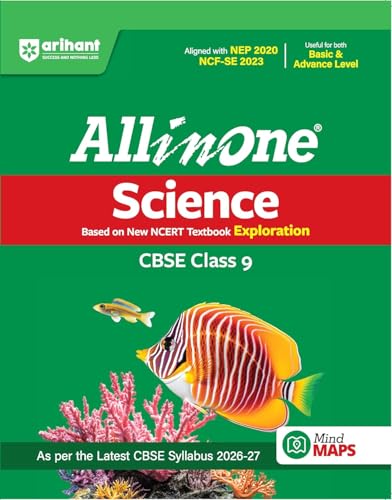
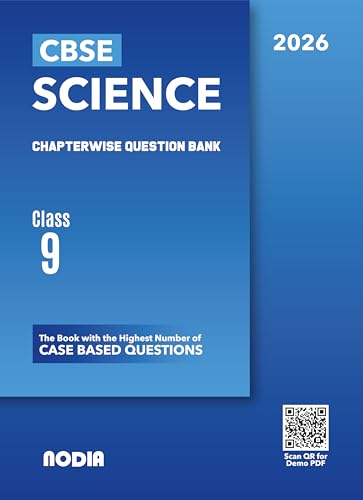
Best Books for CBSE Class 9 Science
Related Guides
CBSE Class 9 English Language & Literature Syllabus 2026-27
CBSE Class 9 Computer Applications Syllabus 2026-27
CBSE Class 9 Maths Syllabus 2026-27
CBSE Class 9 Hindi R1 Syllabus 2026-27
CBSE Class 9 Hindi R2 Syllabus 2026-27
CBSE Class 9 SST Syllabus 2026-27
Stay Updated!
Join our Telegram/WhatsApp group for CBSE updates, free notes, and exam tips!
Bookmark this page & keep revising smartly!
Frequently Asked Questions
Is the NCERT textbook enough for preparation?
Yes, the NCERT Class 9 Science book covers the entire syllabus and is sufficient for theory and practicals.
Are diagrams important in the exam?
Yes, neat and labeled diagrams (e.g., cells, sound waves) can boost marks in descriptive answers.
How much time should I spend daily on Science?
Spend 1-2 hours daily—1 hour on theory (reading/notes) and 30-60 minutes on practicals/numericals.
How many chapters are there in the CBSE Class 9 Science syllabus 2026-27?
The new NCERT Science textbook "Exploration" contains 13 chapters. However, the theory examination is based on four major units covering these chapters.
Is there any new chapter in the CBSE Class 9 Science syllabus 2026-27?
Yes. The revised syllabus includes a new interdisciplinary chapter titled "Earth as a System: Energy, Matter and Life." It also introduces an opening chapter called "Exploration: Entering the World of Secondary Science."
What is the marks distribution for CBSE Class 9 Science 2026-27?
The unit-wise marks distribution is as follows:
World of Living – 27 Marks
Matter – Its Nature and Behaviour – 25 Marks
Motion, Force, Work and Sound – 23 Marks
Earth as a System – 5 Marks
Total Theory Marks: 80
Is the CBSE Class 9 Science syllabus 2026-27 difficult?
The revised syllabus is more application-oriented than previous years. Students who understand concepts, practice numericals, and regularly study the NCERT textbook should be able to score well.
Related posts:
 CBSE Class 9 Maths Syllabus 2026-27: Download PDF & Full Exam Pattern
 CBSE Class 9 English Syllabus 2026-27: Download PDF & Full Exam Pattern
 CBSE Class 9 SST Syllabus 2026-27: Download PDF & Full Exam Pattern
 CBSE Class 9 Hindi Course A (R-1) Syllabus 2026-27: Download PDF & Full Exam Pattern
 CBSE Class 9 Hindi Course B (R-2) Syllabus 2026-27: Download PDF & Full Exam Pattern
 CBSE Class 9 Computer Applications Syllabus 2026-27: Download PDF & Full Exam Pattern
 CBSE 3 Language Formula Explained (R1, R2, R3) – New Rules 2026-27
 Top 15 Major Changes in CBSE Class 9 Curriculum 2026-27